Increasing Smashwords success

When I first came into self-publishing, I didn’t even know about KDP Select. I find myself feeling fortunate about this because whilst many authors noted a lot of success at the beginning of Amazon’s exclusive deal, I’ve read quite a lot of material lately that has suggested that the perks of the arrangement are beginning to wane. Instead, I uploaded to KDP and Smashwords, got into the latter’s premium catalogue and pushed Inside Evil onto the shelves of distributors like Apple, Sony and Barnes & Noble.

There are a number advantages of going with Smashwords, including that they issue payment when you have a minimum of $10 through Paypal, rather than waiting for a minimum $100 cheque balance for foreign publishers (or aliens as America likes to call us) that Amazon requires. Likewise, because I’m based outside the US, I can’t access B&N’s own PubIt, so have to utilise Smashwords to get on their shelves. I don’t own a Mac, so directly uploaded to Apple’s iBooks is impossible, and though Kobo have just released their own publishing tool, I’m yet to use it.

Whilst I’ve used Smashwords to offer codes for freebies, I had NO actual sales from the website itself. I thought it was going to take years for me to ever get the $10 minimum, and with no distributor sales either I was beginning to think it was a lost cause. That was until this month, however, when BAM, I had four B&N and three Apple sales. OK, these numbers aren’t high, but I’m in self-publishing infancy, am doing no advertising for those platforms and am not selling huge amounts on Amazon either. In fact, for July, with those seven distributor sales, I actually made more at Smashwords than at Amazon.

Now, I’m finally happy that I’m utilising Smashwords to distribute Inside Evil across its channels, and for the first time, a few sales seem to be appearing. After the first few months of practically selling nothing, sales are actually creeping up each month; a welcome trend. Do you use Smashwords? Have you noted growing sales at distributors?

How to get 1,000 Ebook sales

How to get 1,000 Ebook sales? That’s a question I often ask myself. Look around the various blogs about self publication, and it seems to suggest that once you’ve hit around 1,000 sales on Amazon, the website’s algorithms will take over and help to make your work more visible. Note that this isn’t total sales, but sales for each title. While, of course, selling more of one title is likely to help sell other works too, pushing up your overall sales figures, it is 1,000 per book that you’re aiming for.

This can be an astronomical figure to reach, especially if you’re only selling tens of books per month. Inside Evil was published in March and I’ve not yet cleared the 100 sales barrier. Interestingly, in my latest giveaway on Elle Casey’s blog, Inside Evil was one of the most sought after titles, so the book itself seems to be in demand and attracting attention. It just doesn’t get noticed by people browsing on Amazon. And, without a lot of luck, I’m warning you, growing to 1,000 sales will be hard work.

But, how can you achieve this feat? How can you reach that target? I’m not entirely sure myself, having not gained those dizzying sales heights yet. There are variety of methods that I’ve come across, and some may work for you, others may not. Here’s some of my findings.

Forums

Some people advocate joining lots of forums, putting your book in your signature and then talking, continuously, about yourself and your work. This doesn’t work and WILL NOT SELL ebooks. You’ll quickly get a spam notification and be ejected from the boards.

However, there are some forums that you might be persuaded to join, such as Kindleboards, the official Kindle forums at Amazon and the Kindle Users Forum. Whilst you’ll get all manner of help and tips at these places, I wouldn’t look for a lot of sales here. Generally, these boards are occupied by people like you; authors wanting to find how to sell ebooks and unlikely buyers.

LibraryThing & Goodreads

My use of LibraryThing and Goodreads has been haphazard at best, largely due to the fact that I hate both website’s interfaces and I find joining in conversations extremely confusing. LibraryThing is great for doing giveaway’s, but though I’ve noted a few reviews trickling through, these haven’t turned into sales. Meanwhile, though I’ve had a very few ‘adds’ on Goodreads which may have possibly led to a miniscule number of sales, my Goodreads ad campaign was a complete failure and I didn’t make one sale from the investment.

Word of Mouth

This is a very obvious way of selling, but if you don’t tell anyone about your book, then how can you expect sales. Word of mouth is vital for sales. Tell friends and family about your book. When you go to parties and meet new people who ask what you do for a career, tell them about your writing and mention your novel’s name..who knows they might just go home and download it. Put a link to Amazon in the signature of your email so when you’re emailing people, you have an unobtrusive marketing ploy ready to go. This has been my best sales tactic to date, helping to push Inside Evil higher in the Amazon charts and therefore being more noticeable.

Twitter

Some people swear by it, others don’t, but I have found that Twitter has got me sales. I have recently opened a new Twitter account devoted to only my writing. Whilst I have a personal account with over 1,000 followers, I tend to have verbal diarrhoea on that feed, and whilst those 1,000 followers don’t care about me talking non-stop about the Olympics or saying slightly rude things when I’ve had a glass of wine too many, I really don’t want my main group of readers and authors bombarded with this. Of course, many may want to, so it’s worth tweeting that you have another account, but to keep all my professional and book related stuff in one place, I now use GWakelingWriter.

One of the good things about Twitter is that you can easily interact with readers. If someone tells you they’ve bought your book, thank them, ask them for feedback. RT their comments if they’re positive reviews. Use Sample Sunday (a writer’s RT group which helps spread book samples on, you’ve guessed it, Sunday’s) to reach a larger audience. Use Writer Wednesday to follow and RT other writers. Most of all, ensure that the majority of your tweets are personal, RTs or links to informative articles rather than constantly links to your own work. This will turn people off immediately, and your Twitter account will never get off the ground.

1,000 ebooks is a hard task…

Selling ebooks is no easy task, and shifting these first 1,000 ebooks is monumentally difficult. I read blogs all the time offering advice on how to get sales, with each and every post saying, ‘once you’ve reached 1,000 sales you can use X, X and X to get increased earnings,’ but what about the climb to 1,000? What about the depressing screen of Amazon’s Beige Bar of Shame when it’s staring at you mid month because you’re yet to have  a sale? What about selling five or 10 copies a month and realising that it’ll take you years to reach that elusive 1,000?

I’ve used the above processes to get a few sales here and there, but nothing that has finally swept me along at pace. I’ll soon be releasing a new book, The Tower of Souls, and I’m hoping that it’ll attract more people to the series. However, for the meantime, it’s the slow plod along. What do you use to try and increase sales? Found any tactics that worked? I’d love to discover new areas that I haven’t tried…and we can all look forward to pushing our sales and cracking that 1,000.
The Difficulty of a title

As you may have discovered in my previous post, I’m setting about finishing a science fiction novel that’s been cluttering my computer files for far too long. I started reading it today and really enjoyed it – ok, I’m very biased – but I very quickly got back into the characters and story. I do have one problem, however, in that the new work has no name.

A title is pretty darn important. Inside Evil was always there from the beginning and worked so well as it can be interpreted on various different levels for the book, from the ancient evil lurking in the woods, to the inner conflict that many of the characters have throughout the story. Likewise, The Tower of Souls came to me as I was writing and I now can’t think of any better title for the second in the series. However, the latest work just isn’t coming along.

Self publishing means that I can flit in and out of published works, change inaccuracies and errors when they’re highlighted, add appendices and epilogues as needed and even, as I’ve just done, change the listings to create one book into a series of books. However, a title sticks. It can be the first thing that readers see and so it’s essential to get it correct. Along with good cover art, an alluring title can persuade people to delve more into the details of a book and hopefully make them buy it.

The problem with my latest work is that I’ve already written it and nothing enthralling has come to mind. I have a working title, but it’s pretty bland and boring, and if I think that, then god only knows what readers will think. Perhaps I’ll pass it to my proofer with the title TBC, perhaps something will come to me, or to her. But, until that crucial element of self publishing is decided, cover art and the ultimate publication is going to be seriously held up!

The Tower of Souls Cover Reveal

There’s something about receiving cover art that makes the whole book publishing process seem real. Even when you type that last word of a novel, the excitement quickly fades to the terror of editing. It’s hard to think of your novel as a product whilst it’s just a small word document on your hard drive.

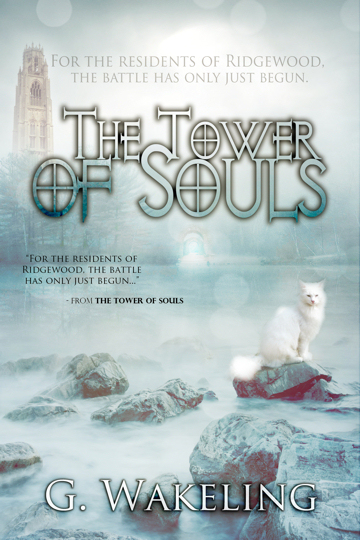
Today I got the artwork for The Tower of Souls, and it suddenly sprang to realisation that, by the end of next month, I’ll have written and self published another book. Two in six months. I’m quite impressed with myself!

Here’s the new cover, which I think has all the lures and attractions of Inside Evil’s artwork whilst distinguishing itself in its own right. What do you think??

The importance of book reviews and word of mouth for ebook sales

It may sound obvious, but word of mouth is one of the major factors that will help you sell books. I know this, you know this, but knowing and doing are two completely different things. When I first started self publishing, I debuted Inside Evil on a bit of a down low. It was my first novel, I didn’t know how it was going to be received and I didn’t want to put family and friends in that awkward position where they have to gush about loving your book whilst they’re secretly cursing the hours they lost having to read their loved ones trash. Luckily, it seems that I didn’t write 70,000 words of trash, but putting a book out there that you’ve slaved over is scary stuff.

Once you hit that self publish button, and for those who are organised enough to get a head start, the marketing and advertising starts. Forum posting, blog commenting, Goodreads ads and LibraryThing giveaways are all part of the process of trying to get sales; along with having fingers and toes crossed that a little bit of luck comes your way. However, from personal experience, the one thing you need to do to sell some books is to swallow your pride and turn to book reviewers, friends and family to spread the word.

Book Reviews

Some people don’t have a lot of luck with book reviews, but I’ve found that it’s been one of the best way to get sales. Most reviewers have a huge backlog of books to read, but getting on as many blogs as possible will passively spread the word of your novel, build some reviews and gain some sales. Most reviewers will post their ratings on their blog, Goodreads, Amazon and even Barnes and Noble, offering you the chance to reach blog readers and grow your range of marketplace reviews. On Goodreads this can help you to reach more people’s shelves, adding to the natural word of mouth spread of your book.

One of my first book blog reviews came in yesterday with a stunning 4.5 stars. A huge thank you to Krista at Breathe in Books for this review, and I’ve already noted an increase in sales which I expect has come off this sole review.  Don’t be persuaded to only go for some of the big book reviewers – get on as many blogs as possible to reach a wider audience.

Two great lists of book reviews can be found at:

Kristy’s Stories book reviewers post
Indie Book Reviewer

Word of Mouth

There’s nothing that says ‘buy this book’ better than a personal recommendation. In the best scenario you want readers to be saying ‘Wow, I read this great book. You should give it a go.’ However, you need a little help now and then, and it’s here that friends and family can help. There’s nothing wrong with asking for a little plug here and there. My sister put out a Facebook status saying that she’d read my book and loved it. She added the Amazon book link and I had several sales from people who were interested. Likewise, an author friend of mine Tweeted about my book, and I had several more sales as a direct result from that.

It’s understandable that you don’t want to rely on friends and family to spread the word, but you have to reach new fans in the first place so that word on your book spreads. Get two friends of a family member to buy your book and recommend it to others, and you soon have new and completely unrelated fans. This in turn will push up your Amazon sales rankings so that you can enter top 100 lists and become more noticeable.

Reaching new fans and getting sales is a difficult task. People will be far more willing to try a new author if they receive a personal recommendation. If, like me, you’re not very good at blowing your own trumpet, asking for help from family and friends can be a huge help to get your ebook sales snowballing.

Raising your profile with Authors Den

For many self publishers the battle with obscurity will begin as soon as the ‘publish‘ button is pressed and we realise that readers aren’t going to automatically flock to our books. Through unsolicited reader reviews and emails from people about your books, you can quickly establish that, yes, your book isn’t crap and there are people out there who are loving it. This can help stop the huge disappointment that is likely to ensue when book sales are slow. If you’re getting one and two star ratings, then perhaps your works needs some fine tuning. But, if you’re getting positive reviews from the few readers that you do have, then it’s a shove in the right direction to keep persevering.

Obscurity is a very hard problem to cure, and visit any self publishing forum you’ll to see hundreds of threads about how to get more sales. Reviews will encourage new readers to buy, but how do you get these reviews in the first place? Getting into the Top 100 is likely to get you seen by more people, but how do you get enough sales to reach these desired spots? Around 1,000 Amazon sales and you’re entering the realms of catching the eye of an algorithm or two so that you’ll appear in some of the spotlight lists. After launching your book and noting sales dribbling in, you may wonder whether you’ll ever make that 1,000.

It seems as if the most positive think that you can do is to write. Write more books, add to existing series, put out titles that people will want to read. However, this takes time, and you can be raising your online profile whilst you write. A Goodreads marketing campaign or a LibraryThing giveaway may help readers find your work and spread the word. Joining sites such as Shelfari, Goodreads and LibraryThing will also help, especially if you participate in discussions. A new site that I’ve come across is Authors Den, and with the owners claiming to have a million visitors a month, then surely creating a profile here is a good idea. Making a profile is easy and you can add books, WITH sales links. It may not give you a thousand sales, but in my eyes, anything to get both your name and book titles seen my more people is a bonus.

How to start a Goodreads book marketing campaign

Up until this point it’s fair to say that I’ve spent minimal money on self publishing. Through the help of a couple of avid readers, I had Inside Evil vetted and proofread for free. Uploading eBooks costs nothing, and I spent $50 on the cover. In addition, I bought this blog domain; so overall I’ve only spent about $65. This, in truth, is nothing when it comes to creating, publishing and advertising a novel.

Those who know me, know that I’m pretty frugal. Some would say I’m tight – I would say I’m financially organised and careful with my spending. It’s the way I was brought up. Just because you might want to buy something, doesn’t mean you should or can buy it. If you really want, you should save – these are the lessons my parents instilled upon me which, in fairness, have been a great help in life. Still, that didn’t stop me blowing my entire student loan in the first year of university on a sound system, hundreds of DVDs and so much booze that I ran out of money in May and had to live of baked beans and scavenged bread for about two months.

Still, I get aside from the point; I don’t like to spend money if I can help it. However, I have finally bitten the bullet and invested into a Goodreads advertising campaign.

The problem with self publishing is that, after that initially flurry of excitement, book sales can slump. I’ve tried to kick start things with a LibraryThing giveaway, but have only had one review, 4 stars, come in. More about that in another post. I know that some indie writers have been successful enough without having to do any advertising, but for the majority of us, some investment will be needed.

Creating a Goodreads campaign is very easy, after all, they want to take your money. However, for those who are worried that it’s going to be difficult to create, fear not. It only takes a few clicks, a couple of lines of copy and you’re off. Goodreads Self Serve advertising took me less than half an hour to fill out and prepare the adverts, and then it took around 12 hours for them to be authorised. Please note, you will need a creditcard so that you can throw some money into the advertising account. However, you can carefully control your Cost Per Click (CPC) rates and set a limit on your daily spend so that money isn’t literally haemorrhaging out of your account.

To prevent huge losses without any actual results, I decided to follow Lindsay Buroker’s advice and go with a targeted market campaign. Whilst you can advertise to everyone, you pay for every click. If these clicks aren’t getting you actual sales, then you’re effectively wasting money and being very inefficient. As it is, I am bidding 30cents for a click. With a royalty rate on Inside Evil of $2.70, it means that if I get one sale for every nine clicks, then I’m breaking even.

In addition to carefully selecting the groups of people I want my novel targeted at, I’ve included the price, the genre and the fact that Inside Evil is an eBook in the actual ad copy. This should stop people wanting paperbacks or crime thrillers clicking on the link and wasting my hard earned cash.

Currently I’m testing out two ads, both pointing to Amazon, to see which has the better CPC rate. I’ll probably add adverts for B&N and Smashwords over time, but at the moment I’m choosing to focus on Amazon whilst I get to grips with the advertising process.

In regards to money, I’ve only dumped $35 into the account. I’ve set a maximum of $5 per day, which gives me 16 clicks. You may not think this is very high, but CPC rates can be pretty unimpressive, as low as 0.05per cent, meaning that for me to max out I’ll actually need to have 32,000 indents during the space of the day to get those 16 clicks. We’ll see how it goes, but I’m not expecting to see these high numbers. And, of course, you can change your maximums or dump more cash in at any time.

Another note to add is that your advertising fund will cover all of your ads. I initially thought I would put $35 in for each of the two ads, but upon creating the second advert, I discovered that they come under the same umbrella. This is great as it offers you the chance to play around with your CPC bid costs and different advert copies without having to invest an increasingly large sum of money.

So, you can see that creating a Goodreads book marketing campaign is fairly easy. From perusing forums and Kindleboards, it seems that some people have success with this route whilst others don’t.  My adverts have been live less than a day and have had 973 indents and no clicks so far.

I will update over the coming weeks 🙂

Increasing book sales by using a mailing list

I recently read a very interesting blog over at Lindsay Buroker’s excellent website. Lindsay talked about how important it was to cultivate a fan base, a following, a group of happy readers who love your work and can’t wait to devour more of your words. It was suggested that if you can cultivate around 10,000 fans, you can be pretty comfortable whether the market for ebooks crashes or Amazon changes its algorithms to make finding your titles even harder. This is a very obvious concept when it’s clearly pointed out, but I hadn’t given it much thought before. Build a thriving fan base, and you can be pretty much assured that you’ll have ‘X’ number of buyers and readers when any new work comes out.

Lindsay’s post made me realise the importance of creating a mailing list from the word go. It doesn’t mean more workload, and you certainly don’t have to be producing a newsletter every month. However, it does offer you a direct link to those who have read your work and are more than happy to know about milestone news. By milestone news I mean the launch of a new title, a public book reading that you may be doing, or perhaps an exciting competition you’re running. It’s important here not to overdo your contact with fans and bombard people with every new blog post and piece of information that you can possible think off – that’s one sure way of having people un-subscribe.

Creating a mailing list is VERY simple, and even Hotmail offers the ability to create categories of people who you can send mail to. Each time a reader wants to be added to the  mailing list I simply add them under a contact name of ‘Inside Evil Updates’ and add them to the appropriate category. Then, when the time comes, simply send a group notice to subscribers using the BCC mailing address (this avoids you sending out the contact emails of EVERYONE on your mailing list to each other) and hey presto, job done.

But, how do you get subscribers?

  • Put a note in the back of your books. At the end of your books, simply tell readers that if they send you an email at ‘X’ address with ‘Y’ in the subject line, they can be added to a mailing list for important author events.
  • Put a note on your website. If people are visiting your website, then there’s a good chance that they may have read, or be about to read, your books. Offer them an obvious chance to stay in the loop.
  • Flatly and out-rightly ask people. I’ve had a couple of emails from readers already and in my response, have ASKED them if they’d like to be put on the mailing list. NEVER just assume the best and add people, because this could put a black mark next to your name when emails start arriving in their inbox.

It’s now my belief that from the moment you finish your book, you should be looking to create that vital fan base. Nurture them, talk to them, help them grow. Writing is a pleasure, and having readers respond positively to your work is a complete wonder. And, though I’ve only just started out, my mailing list is already growing, offering the promise of readers when my next novel hits the virtual shelves.